
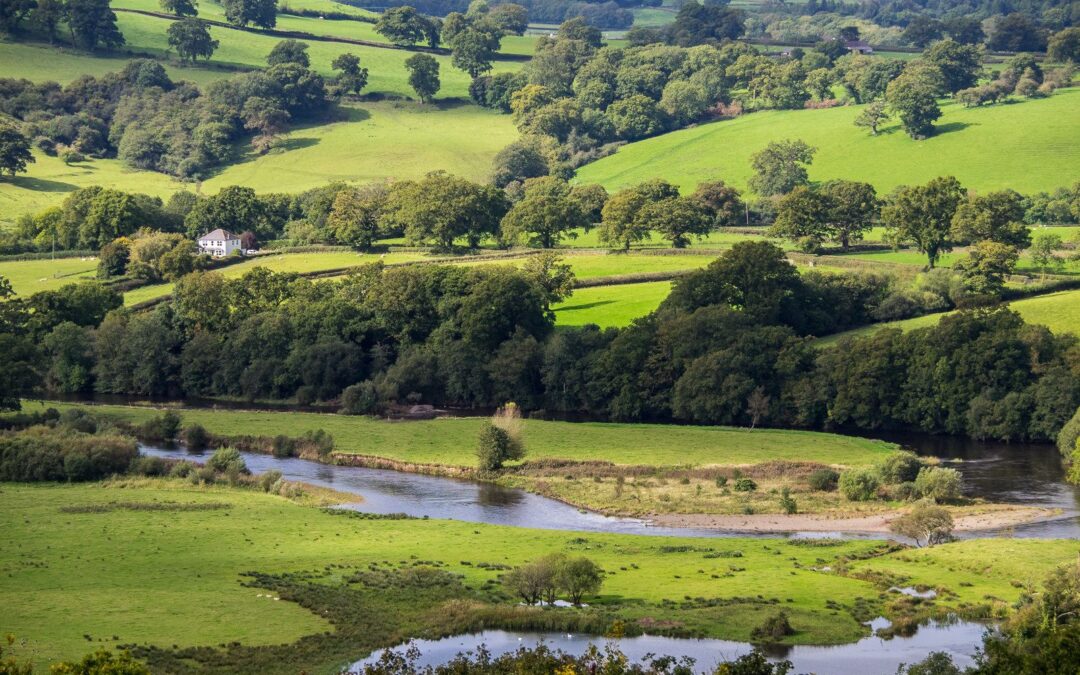
Once you have identified your site, one of the first questions we ask at Cefn Gwlad Designs is whether it falls within a river catchment affected by phosphate pollution. Across large parts of Wales, phosphate levels in protected rivers now play a direct role in whether a new home or development can go ahead and understanding this early can save significant time, cost, and disappointment later in the process.
At Cefn Gwlad Designs, we guide clients through every stage of this process, helping them understand the constraints of their site while finding practical, design-led solutions that keep their project moving forward.
Understanding Phosphate Pollution
Phosphates are naturally occurring nutrients found in wastewater, agricultural run-off, and septic tank discharge. In small amounts they are harmless, but in excess they cause algal blooms in rivers and lakes, starving the water of oxygen and damaging the delicate ecosystems that rely on it.
Many of Wales’s most important rivers, including catchments in Gwynedd, Anglesey, and further afield, are designated as Special Areas of Conservation (SACs). Where phosphate levels in these catchments already exceed safe limits, Natural Resources Wales requires that any new development proves it will not add further phosphate to the water system before planning permission can be granted. This is known as demonstrating “nutrient neutrality.”
Routes to Overcoming Phosphate Constraints
There are two main approaches to satisfying phosphate neutrality requirements: on-site mitigation and off-site mitigation.
On-Site Mitigation
This route involves reducing or fully offsetting the phosphate impact of a development within the boundary of the site itself. This might include enhanced sewage treatment systems, sustainable drainage that reduces run-off, or a reduction in the overall scale of development to bring the phosphate load down to an acceptable level.
This approach works well for smaller sites and self-build projects, where design flexibility allows treatment solutions to be built into the scheme from the outset. Getting the calculations right early avoids costly redesigns further down the line.
Off-Site Mitigation
Where on-site solutions cannot fully offset a development’s impact, off-site mitigation allows developers to purchase phosphate “credits” through approved schemes, such as wetland creation or changes to agricultural land management elsewhere in the same catchment. These schemes remove an equivalent or greater amount of phosphate from the water system, allowing development to proceed on a neutral basis.
This route is often used for larger developments, or where site conditions make on-site solutions impractical. It does, however, require careful evidence and sign-off from Natural Resources Wales, so early engagement is essential.
Why Phosphate Assessments Matter
Beyond being a planning requirement, addressing phosphate impact responsibly protects the rivers and habitats that make so much of Wales special. Taking it seriously ensures that:
River and lake ecosystems are protected from further nutrient overload.
Protected species and habitats within SACs are not put at further risk.
Planning applications are not delayed or refused due to unresolved nutrient neutrality concerns.
Developments contribute positively to the long-term health of the catchments they sit within, rather than adding to existing pressures.
These requirements are not obstacles; they are safeguards, ensuring that new homes can be built without compromising the rivers and landscapes that make the area worth living in.
Our Role in the Process
At Cefn Gwlad Designs, we assess the phosphate status of a site at the earliest possible stage, before significant design work or cost is committed. We calculate likely phosphate impact, advise on the most appropriate mitigation route, and liaise directly with Natural Resources Wales and the local planning authority to keep applications moving.
Our experience with phosphate-sensitive catchments means we can anticipate where problems are likely to arise and build solutions into the design from day one, rather than reacting to objections after submission.
Building Responsibly for the Future
Meeting phosphate neutrality requirements is not just about ticking boxes. It is about taking responsibility for the impact a new home has on the wider environment it sits within.
By assessing sites early, designing thoughtfully, and choosing the right mitigation route, we help clients bring their projects forward even in the most environmentally sensitive locations without losing sight of the landscapes and rivers that make Wales such a special place to build.
At Cefn Gwlad Designs, we believe good design and good environmental practice go hand in hand. From the first site assessment to final approval, we are here to help you navigate phosphate constraints with confidence.